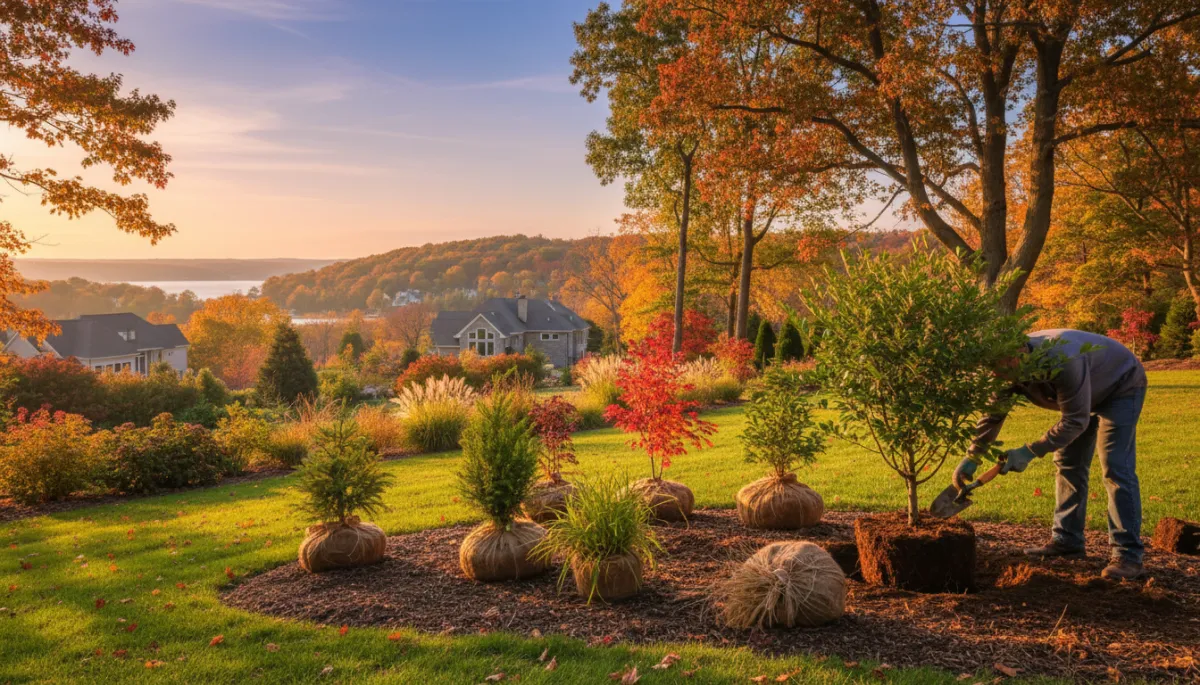
Fall Planting Guide for Trees & Shrubs in NJ
Fall Planting New Jersey, Tree and Shrub Planting Ocean County NJ, Landscape Planting Monmouth County NJ
Why Fall Is One of the Best Times to Plant Trees & Shrubs in New Jersey
For homeowners in Ocean and Monmouth Counties, fall is more than just football season and foliage. It is also one of the best times of year to install new trees, shrubs, and landscape plants along the Jersey Shore. Since 1989, New Dimensions Landscaping Inc. has been helping local properties take advantage of this powerful planting window to build healthier, longer‑lasting landscapes.
Why Fall Planting Works So Well in New Jersey
When people ask about the best time to plant shrubs in New Jersey, we often explain that both spring and fall are excellent. However, for many trees, evergreen and deciduous shrubs, ornamental grasses, and perennials, fall planting in New Jersey offers unique advantages, especially in coastal areas of Ocean and Monmouth Counties (zones 6b–7a).
Cooler Air Temperatures, Warm Soil
By September and October, our daytime highs start to moderate, and nights cool down. This cooler air dramatically reduces stress on new plantings compared with July and August. At the same time, the soil in Ocean and Monmouth Counties still holds the warmth accumulated over summer. According to Rutgers Cooperative Extension, this combination of warm soil and cool air is ideal for root growth in trees and shrubs, even while top growth slows.
Reduced Heat Stress and Less Watering Pressure
Summer plantings along the Jersey Shore face intense sun, high humidity, reflected heat from driveways and siding, and often, inconsistent rainfall. Newly installed plants can wilt quickly and require constant attention. In contrast, fall landscaping in NJ benefits from milder sun angles and more frequent rainfall. Plants lose less moisture through their leaves, so there is less watering pressure compared to summer. You still need to water correctly, but you are not fighting 90‑degree afternoons and scorching winds off the pavement.
Stronger Root Establishment Before Next Spring
One of the most important benefits of fall planting in New Jersey is what happens below the surface. Even after leaves drop, roots continue to grow in our region until the soil cools significantly. That means trees, shrubs, and perennials planted in fall can focus on building a strong root system instead of pushing new foliage and flowers. When spring arrives, those plants are already settled in and ready to grow, often outperforming similar plants installed the following April or May.
💡 Professional Insight: Think of fall planting as giving your landscape a “head start.” Roots get several extra months to establish before they are asked to support a full canopy of leaves and summer heat.
The Ideal Fall Planting Window in Ocean & Monmouth Counties
Many homeowners look for a specific date on the calendar, but the ideal fall planting window in New Jersey is better defined by conditions than by the page of a planner. Along the central Jersey Shore, a practical guideline for trees and shrubs is early September through early to mid‑November, depending on the year. Rutgers notes that trees and shrubs should be planted in fall “before the first frost,” but local microclimates and plant types matter.
Aim to plant when soil is still workable and above freezing, with no hard freeze in the immediate forecast.
Avoid planting in waterlogged or compacted soil after heavy storms, which can suffocate new roots.
Give evergreens more time; most should be planted earlier in fall than many deciduous shrubs and perennials.
In other words, fall planting New Jersey decisions should not be based solely on the date. We look carefully at the specific plant species, current weather patterns, soil temperature and moisture, and the likelihood of an approaching freeze. A shallow‑rooted evergreen hedge, for example, should not go into the ground as late as a hardy, dormant perennial.
Choosing Plants That Thrive on Jersey Shore Properties
Successful tree and shrub planting in Ocean County NJ or landscape planting in Monmouth County NJ starts with the right plant in the right place. Our coastal environment presents unique challenges: sandy soils, salt spray, strong winds, and in many neighborhoods, heavy deer pressure. When we design fall planting plans, we evaluate each property carefully.
Key Factors to Consider
Sun and shade: Observe how the sun moves across your property. Full‑sun ornamental grasses will not perform well in deep shade, and shade‑loving perennials will scorch on a south‑facing foundation.
Mature size: A shrub that looks small in a nursery pot may reach 6–8 feet wide. We always design for the plant’s mature size so it does not overwhelm walkways, windows, or utilities in a few years.
Drainage and soil conditions: Many Jersey Shore properties have fast‑draining, sandy soils, while others have low spots that hold water. Trees and shrubs that tolerate periodic wetness are very different from those that demand sharp drainage.
Salt and coastal exposure: Closer to the ocean or Barnegat Bay, salt spray and wind can burn foliage and desiccate evergreens. We often recommend salt‑tolerant species and strategic windbreaks in these locations.
Deer pressure: Many neighborhoods in Ocean and Monmouth Counties experience heavy browsing. While no plant is completely deer‑proof, we prioritize deer‑resistant trees, shrubs, and perennials in high‑pressure areas.
Irrigation: Properties with automatic irrigation systems can support a wider range of plant material. Where irrigation is limited, we select more drought‑tolerant species and emphasize proper mulching.
Landscape design compatibility: We look at existing hardscapes, architecture, and views. New fall plantings should complement your home’s style, not compete with it, and should integrate with long‑term landscape goals.
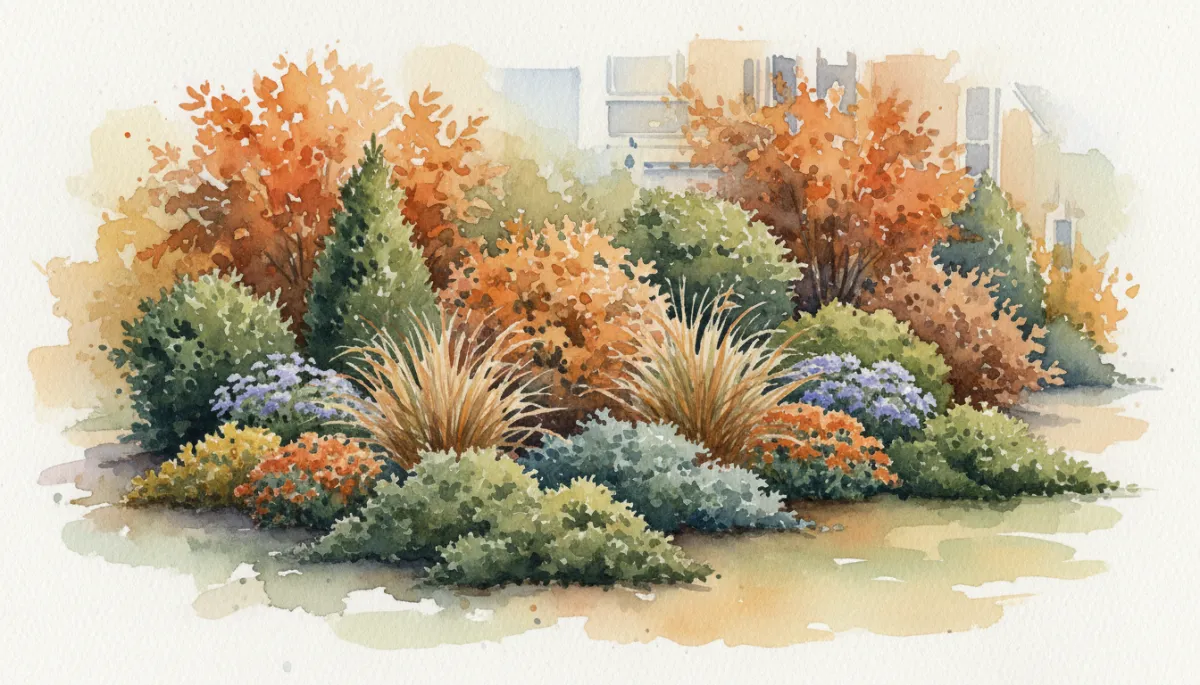
Thoughtful fall plant selection builds structure, color, and privacy that last year‑round.
Proper Planting Practices for Long‑Term Success
Even the best plant choice will struggle if it is installed incorrectly. Over the decades, we have seen many avoidable problems caused by improper depth, poor soil preparation, or incorrect watering. When we handle fall landscaping in NJ, we follow proven, homeowner‑friendly practices.
Planting Depth and Root‑Ball Handling
Trees and shrubs should be planted so the top of the root ball is at or slightly above the surrounding grade, never buried too deeply. Planting too deep is a common cause of decline.
We loosen or slice circling roots on container plants to encourage them to grow outward into the native soil rather than continuing to spiral in the pot shape.
Soil Preparation, Mulching, and Watering
We prepare a wide planting area, loosening the soil beyond the hole so new roots can penetrate easily. On very sandy or compacted sites, we may incorporate organic matter based on soil‑test recommendations.
A 2–3 inch layer of mulch helps conserve moisture, moderate soil temperature, and reduce weeds. Mulch is kept away from direct contact with the trunk or stems to prevent rot.
Even in fall, new plantings require regular watering until the ground freezes. We typically recommend deep, less frequent soakings rather than light daily sprinkles, adjusting for rainfall and soil type.
📌 Key Takeaway: Correct depth, careful root‑ball handling, and consistent watering are just as important in October as they are in May. Fall planting success is not an accident—it is the result of sound technique.
Fall Planting Is Also an Opportunity to Improve Your Landscape Design
Beyond the horticultural benefits, we view fall as one of the best times to step back and evaluate how your landscape looks and functions. With summer growth still visible and next spring on the horizon, fall planting offers a strategic opportunity to refine your overall design.
Replace overgrown or failing plants: Mature shrubs that block windows, crowd walkways, or constantly struggle can be removed and replaced with better‑scaled, site‑appropriate species during fall.
Enhance foundation plantings: Updating the front of your home with layered evergreens, flowering shrubs, and perennials creates four‑season curb appeal and softens hard architectural lines.
Add privacy and screening: Well‑placed evergreen trees and shrubs can shield neighboring views, pool areas, or busy streets while still fitting the character of your property.
Introduce seasonal color and texture: Ornamental grasses, fall‑blooming perennials, and shrubs with colorful berries or foliage keep your landscape interesting long after summer flowers fade.
Improve layering and structure: Fall is an excellent time to adjust plant heights and groupings so your beds transition smoothly from taller trees and shrubs at the back to lower perennials and groundcovers at the front.
When planned thoughtfully, fall landscaping in NJ can set the stage for a landscape that looks more polished the very next spring, not years down the road.
Trees, Shrubs, Ornamental Grasses & Perennials: Timing Matters
Most trees, many evergreen and deciduous shrubs, numerous ornamental grasses, and a wide range of perennials can be planted successfully in fall. However, timing and species selection are important. Not every plant is a good candidate for very late‑season installation.
Trees: Shade and ornamental trees generally perform well when planted from early fall through mid‑season, giving roots time to establish. Some thin‑barked or marginally hardy species may be better reserved for spring.
Evergreen shrubs: Because evergreens continue to lose moisture through their foliage in winter, we prefer to plant them earlier in fall. This allows more time for root growth before cold, drying winds arrive.
Deciduous shrubs: Many deciduous shrubs can be planted later into the season, especially once they have dropped their leaves and gone dormant, as long as the soil is still workable and not frozen.
Ornamental grasses and perennials: These are usually excellent candidates for fall planting, often dividing and replanting existing clumps. Again, we avoid pushing too far into late November, especially for borderline‑hardy varieties.
An experienced landscape design/build company can help you decide which plants to install now and which to schedule for spring, ensuring each one has the best chance to thrive in your specific corner of Ocean or Monmouth County.
Fall Planting FAQ for Ocean & Monmouth County Homeowners
Is October too late to plant trees and shrubs in New Jersey?
In much of central coastal New Jersey, October is often an excellent month for planting, especially for many deciduous trees and shrubs. The key is to monitor soil conditions and the forecast. If the soil is still warm and workable and no hard freeze is imminent, October planting can be very successful. Certain evergreens and sensitive species, however, should be planted earlier or postponed until spring.
Do newly planted shrubs need irrigation in fall?
Yes. While you will not need to water as frequently as in summer, newly planted shrubs still require consistent moisture in fall. We recommend deep watering after installation and then monitoring the soil weekly, adjusting for rainfall. The goal is to keep the root zone evenly moist, not saturated, until the ground approaches freezing.
Do plants grow roots after the leaves fall?
In our climate, many woody plants continue to develop roots even after their leaves have dropped, as long as soil temperatures remain above freezing. This is one reason fall planting New Jersey projects can be so effective: the plant’s energy shifts from foliage to the root system, strengthening its foundation for next spring’s growth.
Do fall‑planted landscapes need winter protection?
Some do. On exposed coastal sites, we may recommend burlap wraps or windbreaks for certain evergreens, especially in their first winter. Adequate mulch over the root zone is also important to moderate temperature swings. Your specific need for winter protection depends on plant type, location, and exposure to wind and salt.
How do I know if fall or spring is better for my project?
Both seasons can be excellent for planting in New Jersey. Fall often favors root establishment and reduced stress, while spring offers a full growing season ahead. The best choice depends on your plant list, site conditions, and project scope. A professional design/build team can phase your installation so each plant is installed at the most appropriate time.
Ready to Plan Your Fall Planting Project?
With more than three decades of experience designing and installing landscapes throughout Ocean and Monmouth Counties, New Dimensions Landscaping Inc. understands how to use the fall season to your advantage. From evaluating sun, soil, drainage, and deer pressure to selecting the right mix of trees, evergreen and deciduous shrubs, ornamental grasses, and perennials, our team focuses on practical, long‑term solutions tailored to Jersey Shore properties.
If you are considering fall planting in New Jersey—whether you want to refresh tired foundation plantings, add privacy, or completely renovate your yard—our design/build process can guide you from concept through professional installation. Contact New Dimensions Landscaping Inc. to discuss your landscape design, renovation, and tree and shrub planting needs in Ocean and Monmouth Counties, and give your property a strong, healthy start before the next growing season begins.
