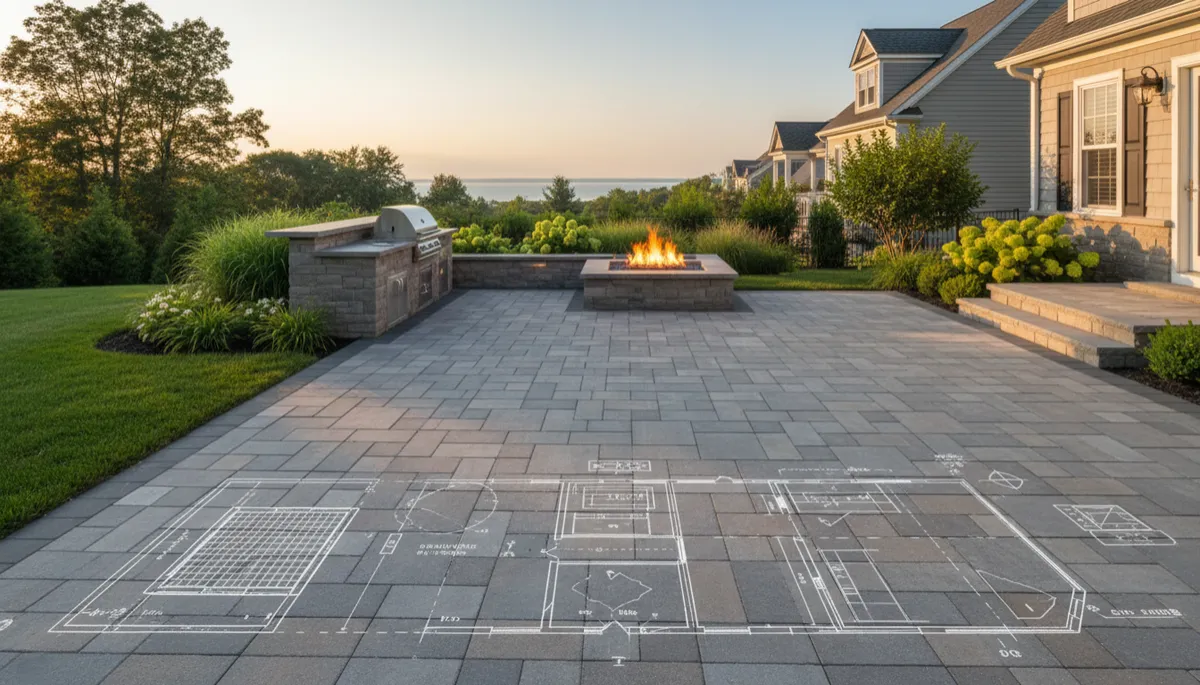
Plan Your Perfect Paver Patio in New Jersey
Landscaping, Paver Patio New Jersey, Outdoor Living New Jersey
Planning a Paver Patio in New Jersey: What Homeowners Should Know Before They Build
A successful paver patio in New Jersey starts long before the first stone is laid. For Ocean and Monmouth County homeowners, thoughtful planning, sound design, and proper construction are what separate a long‑lasting outdoor living space from one that quickly becomes a maintenance headache. This guide walks you through the key decisions to make before you build, and how a professional patio contractor at the Jersey Shore can help you get it right the first time.
Start With How You Will Use Your Paver Patio
Before you think about paver styles or colors, begin with a clear picture of how you want to live outside. A well‑planned paver patio New Jersey homeowners truly enjoy is always driven by lifestyle, not just materials. Ask yourself who will use the space, how often, and for what types of activities throughout the year.
Do you envision quiet mornings with coffee, or large family gatherings and summer barbecues? Will the patio support a full outdoor kitchen, a hot tub, or a fire pit for cool Jersey Shore evenings? If you have children or pets, you may need open space for play in addition to seating and dining zones. Thinking through these details early helps determine the size and layout of your paver patio Ocean County NJ or Monmouth County project and informs every design choice that follows.
Location Considerations: Sun, Shade, Privacy, and Views
Choosing the right location on your property is one of the most important planning decisions. In Ocean and Monmouth Counties, many homes are oriented toward water, wooded areas, or neighborhood streets, and each setting presents different opportunities and constraints. A professional patio contractor Jersey Shore will walk your property with you to evaluate options before design begins in earnest.
Consider where the sun falls at different times of day. A south‑facing patio may be ideal for spring and fall but uncomfortably hot in mid‑summer without shade structures. A north‑facing or heavily shaded patio may stay cooler but take longer to dry after rain. Privacy from neighbors, proximity to the kitchen or family room, and views toward the backyard, pool, or natural features should all factor into location decisions. For many paver patio Monmouth County NJ projects, the best solution is a primary patio off the main living area, sometimes complemented by a secondary, more private seating area elsewhere on the property.
Grading and Drainage: Protecting Your Home and Patio Investment
New Jersey’s freeze–thaw cycles, coastal storms, and occasional heavy downpours make grading and drainage critical for any hardscape project. Poor drainage can lead to standing water on the surface, heaving and settling of pavers, and even water intrusion into your foundation or basement. A qualified hardscape contractor NJ will evaluate existing grades, soil conditions, and how water currently moves across your property before finalizing a design.
Proper patio planning typically includes establishing a gentle slope away from the home, integrating drains where needed, and ensuring that downspouts and sump pump discharges are directed away from the patio base. In some Ocean County yards, especially near the bay or in low‑lying areas, it may be necessary to raise the patio slightly or incorporate retaining walls and additional drainage components to keep the space dry and stable over time. Addressing these issues on paper before construction avoids costly corrections later.
The Importance of a Proper Base for Long‑Term Performance
While pavers themselves get most of the visual attention, it is the unseen base beneath them that largely determines how your patio will perform. A properly built paver patio New Jersey homeowners can rely on for decades begins with excavation to the correct depth, removal of organic material, and installation of a compacted base of suitable stone aggregates. Skimping on this step is one of the fastest ways to end up with uneven surfaces, loose pavers, and drainage problems.
In our coastal climate, base thickness and compaction standards must account for soil type, anticipated loads, and freeze–thaw movement. For example, a standard patio used primarily for foot traffic requires a different base design than a driveway or an area that will support heavy kitchen equipment. An experienced hardscape contractor NJ like New Dimensions Landscaping understands these technical requirements and follows manufacturer and industry guidelines so that your investment stands up to years of use and seasonal weather changes.
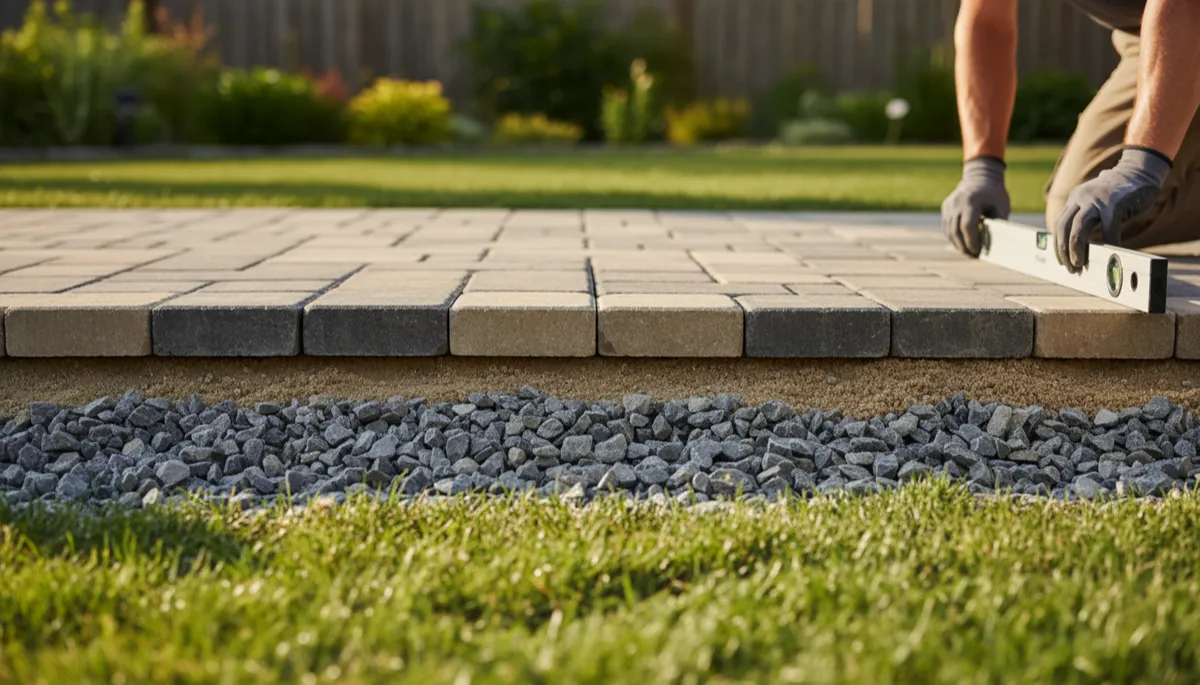
A properly compacted base is the foundation of every durable paver patio.
Paver Choices: Material, Style, and Performance Considerations
Once the functional planning is in place, it is time to explore the many options for paver materials. For most paver patio design NJ projects, homeowners consider high‑quality concrete pavers, natural stone, or porcelain pavers. Each category offers different aesthetics, textures, and price points, and each interacts differently with New Jersey’s climate and coastal environment.
Concrete pavers are popular for their durability, wide range of styles, and consistent sizing, which supports complex patterns and clean lines. Many manufacturers offer products specifically engineered for freeze–thaw resistance and de‑icing salts, making them well‑suited to Ocean and Monmouth County winters. Natural stone, such as bluestone or granite, provides a timeless, high‑end appearance but may require additional consideration for slip resistance and long‑term maintenance. Porcelain pavers deliver a sleek, contemporary look with excellent stain resistance and color stability, often used in modern outdoor living New Jersey spaces that connect to interior tile floors.
Getting the Size Right: Planning for Real‑World Use and Furniture
Patio size is one of the most common areas where homeowners underestimate their needs. A patio that looks generous on paper can feel tight once furniture, grills, and planters are in place. When New Dimensions Landscaping designs a paver patio Ocean County NJ or Monmouth County project, we begin by mapping out actual furniture footprints, circulation paths, and functional zones to ensure the finished space feels comfortable and usable, not cramped or oversized and disconnected from the home.
As a general guideline, allow adequate space around dining tables for chairs to pull back and for people to walk behind seated guests. For lounge areas, plan for side tables, footrests, and enough clearance to move between seating groups. If your goal is to host large gatherings, it may be more effective to create multiple interconnected patio areas rather than one large, uninterrupted slab. A thoughtful paver patio design NJ balances scale with budget, views, and the existing architecture of your home.
Pattern and Layout: Visual Interest and Practical Benefits
Paver patterns do more than create visual interest; they can influence how large or small a patio feels, how easily it is to navigate, and how well it hides everyday wear. Running bond, herringbone, basketweave, and modular patterns each have distinct characteristics. For example, herringbone patterns offer excellent interlock, making them a strong choice for high‑traffic or vehicular areas, while large‑format modular patterns can create a clean, contemporary look for modern homes along the Jersey Shore.
Borders, insets, and banding can help define different zones within a single patio, such as dining, lounging, and pathways, without the need for physical barriers. They also provide an opportunity to introduce accent colors or complementary textures. A skilled patio contractor Jersey Shore will use pattern and layout to guide movement, highlight focal points, and tie the patio visually to the home’s architecture and surrounding landscape.
Choosing Color: Coordinating With Home, Landscape, and Climate
Color selection has a significant impact on the overall feel of your paver patio New Jersey project. Neutral grays, tans, and soft blends remain popular in Ocean and Monmouth Counties because they complement a wide range of siding, roofing, and trim colors while aging gracefully. Warmer tones can create a welcoming, traditional look, while cooler palettes pair well with coastal and contemporary architecture. It is also wise to consider heat absorption; darker colors can become noticeably hotter in full sun during the summer months.
When New Dimensions Landscaping develops a paver patio design NJ plan, we review samples on site so you can see how colors appear in your actual lighting conditions. We also consider how the patio will interact with existing features such as pool coping, walkways, and retaining walls, ensuring a cohesive, professionally curated appearance across your entire property rather than a patchwork of mismatched surfaces.
Raised Patios and Elevation Changes: Making Sloped Yards Usable
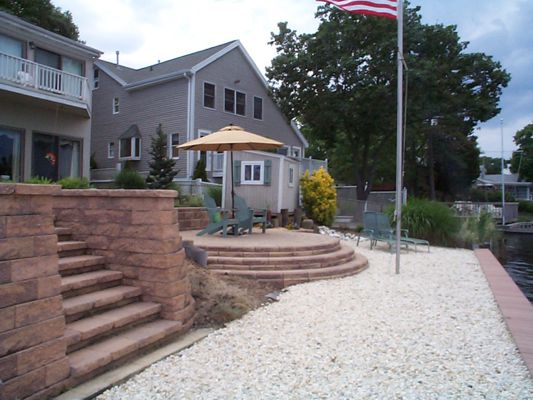
Many properties in Ocean and Monmouth Counties feature sloped yards, walk‑out basements, or elevated decks. In these situations, a raised patio or a series of terraced spaces can transform previously unusable grades into attractive, functional outdoor rooms. Properly engineered walls, steps, and landings are essential for safety, code compliance, and long‑term stability in these designs.
A raised paver patio Monmouth County NJ project may tie directly into a first‑floor living area, with wide steps leading down to a lawn or pool deck. In Ocean County, where some homes are elevated due to flood requirements, raised patios can create comfortable transitions from the main living level to ground‑level spaces while integrating storage, seating walls, and planting pockets. These projects demand careful attention to drainage behind walls, step dimensions, and railings where required by local code—another area where professional design and installation are invaluable.
Integrating Features: Fire Pits, Fireplaces, and Outdoor Kitchens
Today’s outdoor living New Jersey spaces often extend far beyond a simple seating area. Fire pits, fireplaces, outdoor kitchens, bars, and built‑in seating can all be seamlessly integrated into a comprehensive patio plan. The key is to design these elements as part of the initial layout, not as afterthoughts. This ensures proper clearances, gas and electric routing, ventilation, and comfortable traffic flow around each feature.
For example, a gas fire pit should be located where prevailing winds will not consistently blow smoke toward seating or into the home. An outdoor kitchen must account for appliance dimensions, countertop space, storage, and proximity to the indoor kitchen. New Dimensions Landscaping works closely with homeowners to determine which features will truly enhance their lifestyle and then integrates them into a cohesive paver patio design NJ that looks intentional and functions smoothly day to day.
Landscape Lighting: Extending the Use and Safety of Your Patio
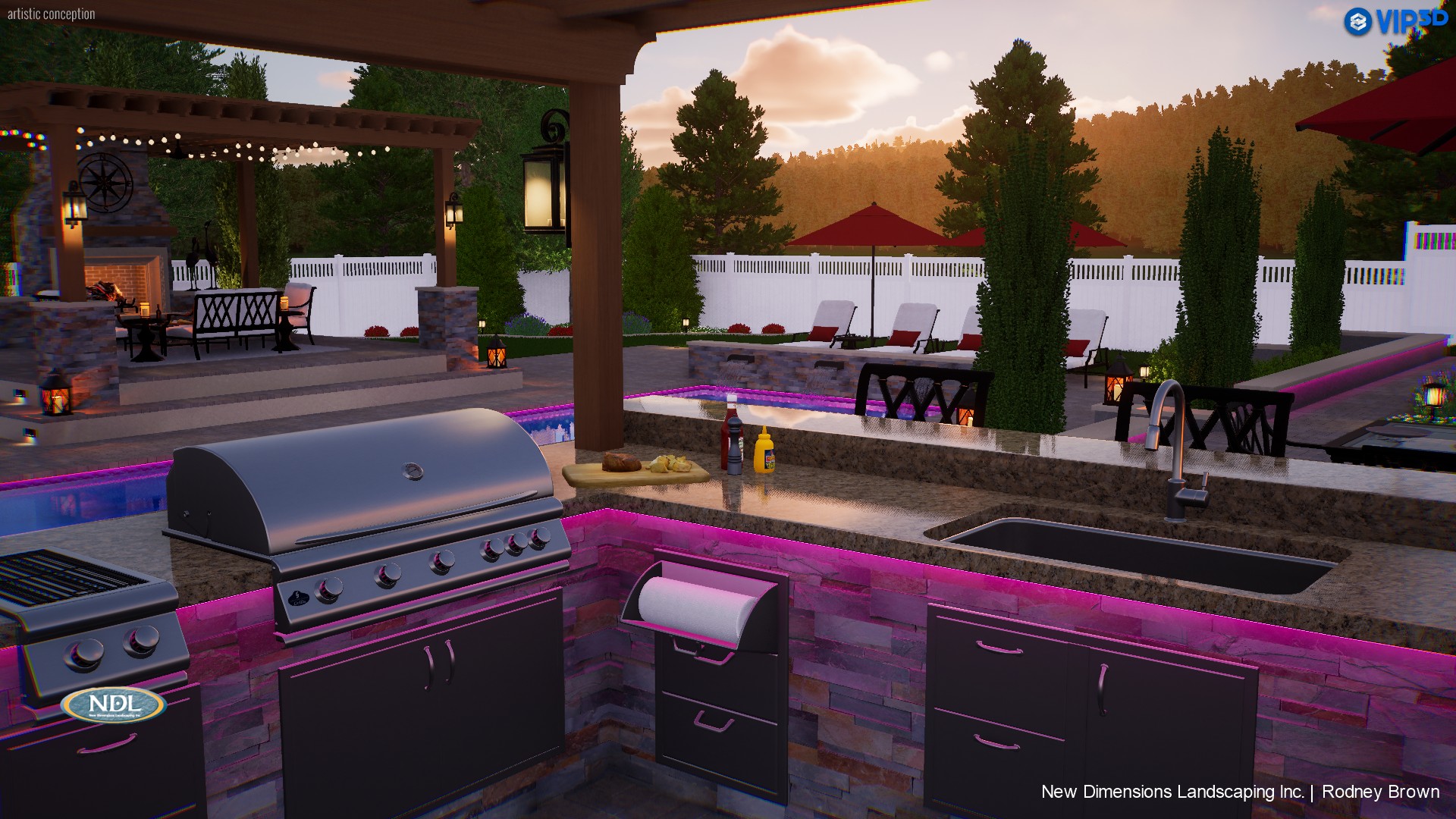
Thoughtful landscape lighting is one of the most effective ways to extend the enjoyment of your paver patio New Jersey space into the evening hours. Low‑voltage LED fixtures integrated into steps, seating walls, and adjacent plantings provide both safety and ambiance. Path lights guide guests, while subtle downlighting from nearby structures or trees can create a warm, inviting glow without glare.
Planning lighting at the same time as your patio layout allows conduit, wiring, and transformer locations to be incorporated cleanly into the design. This avoids the need to disturb finished hardscapes later. A professional patio contractor Jersey Shore with lighting experience will help you layer functional and decorative lighting to highlight key features, improve security, and create a resort‑like atmosphere in your own backyard.
Planting Around the Patio: Softening Edges and Providing Seasonal Interest
Hardscape alone can feel stark. Well‑designed planting beds around and within your patio soften edges, add color and texture, and help your new space blend naturally with the rest of the property. In Ocean and Monmouth Counties, plant selections must consider salt tolerance near the coast, deer pressure in wooded areas, and microclimates created by structures and paving surfaces.
New Dimensions Landscaping often incorporates foundation plantings, ornamental grasses, flowering shrubs, and seasonal color into outdoor living New Jersey projects to provide interest from early spring through late fall. Strategic placement of taller plantings can enhance privacy, while low, layered beds maintain sightlines and make patios feel more expansive. Drip irrigation and soil preparation are also important planning considerations to support long‑term plant health and reduce maintenance demands.
Connecting the Patio to the Overall Property and Home
A patio should never feel like an isolated island of pavers. Successful paver patio Ocean County NJ and Monmouth County projects are carefully integrated into the broader property and home architecture. This includes considering how people move from driveway to front door, from house to backyard, and from patio to other outdoor amenities such as pools, play areas, or gardens. Walkways, steps, and secondary gathering spaces should be planned together rather than pieced together over time without a master concept.
Visually, tying materials, colors, and design details together across the property reinforces a sense of cohesion and quality. For example, repeating a border stone from the front walk in the backyard patio, or echoing the home’s trim color in paver accents, helps create a unified, professionally curated landscape. As a full‑service hardscape contractor NJ, New Dimensions Landscaping looks beyond the patio footprint to ensure every project supports a long‑term vision for the entire property.
The Value of Professional Design and 3D Visualization
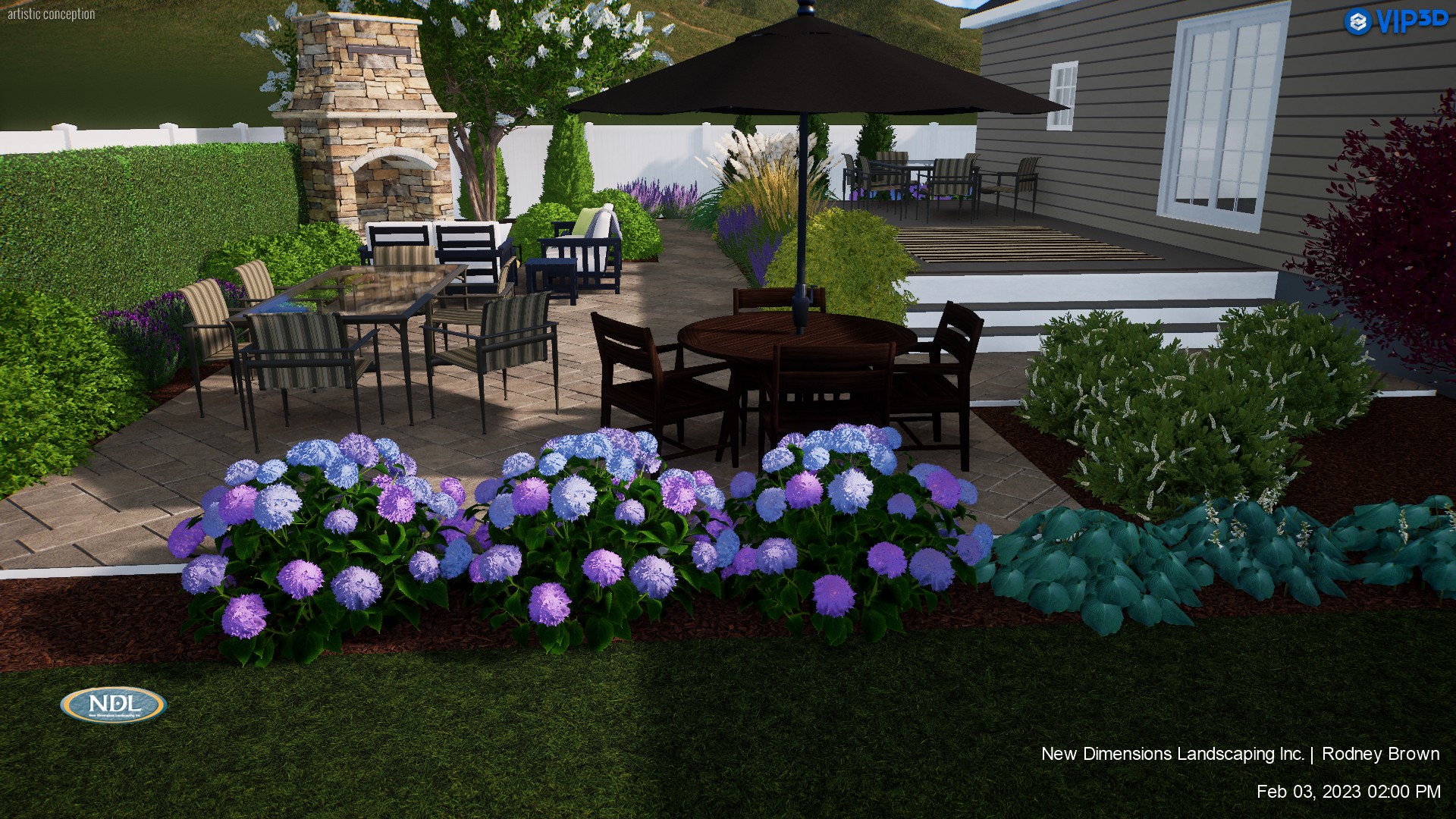
Homeowners often find it difficult to visualize how a proposed patio will look and feel in real space. Professional design and 3D visualization bridge that gap. By modeling your home, grades, and proposed hardscape and planting elements, New Dimensions Landscaping can show you accurate perspectives of your future paver patio design NJ from multiple angles and at different times of day. This allows you to refine layout, size, materials, and features before construction begins, reducing surprises and change orders.
3D visualization is especially valuable for complex projects involving raised patios, outdoor kitchens, fireplaces, or multi‑level spaces. It helps clarify how elevation changes will be handled, how much of the yard will remain open, and how the new patio will relate to existing structures. For many Ocean and Monmouth County homeowners, seeing a realistic representation of their outdoor living New Jersey plan provides the confidence needed to move forward with a significant investment.
Permits and Local Requirements in Ocean and Monmouth Counties
Depending on the scope of your project and your municipality, permits may be required for patios, retaining walls, steps, railings, and gas or electrical connections for outdoor features. In some coastal areas, zoning regulations, impervious coverage limits, and floodplain requirements can influence patio size, location, and construction methods. Navigating these rules can be challenging for homeowners who are not familiar with local codes and review processes.
Working with an experienced patio contractor Jersey Shore who routinely handles projects in Ocean and Monmouth Counties helps ensure that your patio is designed and built in compliance with local requirements. New Dimensions Landscaping assists clients with the permit process, providing drawings, specifications, and documentation as needed so that approvals are obtained efficiently and construction can proceed without unnecessary delays or complications.
Budget Planning: Aligning Vision, Priorities, and Investment
A clear, realistic budget is essential for any paver patio New Jersey project. Costs are influenced by patio size, site conditions, base requirements, material choices, integrated features, and the complexity of the design. Early in the planning process, it is helpful to discuss a comfortable investment range with your contractor so that design decisions can be guided accordingly and surprises are minimized once proposals are presented.
If your wish list extends beyond your current budget, a phased approach may be appropriate. For example, the primary patio, base infrastructure, and conduit for future lighting or gas lines can be installed in phase one, with additional features such as an outdoor kitchen or secondary seating area added later. New Dimensions Landscaping works with homeowners to prioritize elements that deliver the greatest day‑to‑day value while preserving flexibility for future enhancements to their outdoor living New Jersey environment.
Timing Your Project: Seasonal Considerations and Lead Times
Timing is another critical planning factor. Many Ocean and Monmouth County homeowners want their new patio ready for spring and summer, which means design and approvals should begin well in advance. Quality hardscape contractor NJ firms often book projects months ahead, particularly during peak seasons. Starting the design process in late fall or winter can position your project for early‑season construction and maximum use during the warm months.
Weather also plays a role. While patios can be installed in much of the year, extended freezing conditions, heavy rain, or saturated soils can delay work or compromise base preparation if not managed correctly. A reputable patio contractor Jersey Shore will schedule and sequence work to protect the integrity of your project, even if that means adjusting timelines to avoid cutting corners during unfavorable conditions. Building a bit earlier or later in the season can sometimes help avoid the busiest periods and provide more scheduling flexibility.
Frequently Asked Questions About Planning a Paver Patio in New Jersey
How thick should the base be for a paver patio?
Base thickness depends on soil conditions and expected loads, but for most paver patio Ocean County NJ and Monmouth County residential patios, a compacted aggregate base of approximately 4–8 inches is typical, with additional depth for driveways or areas supporting heavier loads. The key is proper excavation, use of appropriate stone, and thorough compaction in layers. New Dimensions Landscaping evaluates each site individually and designs the base to meet or exceed industry standards for long‑term performance.
Can pavers be installed over an existing concrete patio?
In some cases, yes. If the existing concrete is structurally sound, has proper pitch for drainage, and meets height and threshold requirements, pavers can sometimes be installed over it using specific methods. However, if the concrete is cracked, settled, or poorly sloped, it is usually better to remove it and rebuild a proper base. A site visit from a qualified hardscape contractor NJ is the best way to determine the appropriate approach for your property.
Do I really need to worry about drainage for my patio?
Absolutely. Effective drainage is essential for any paver patio New Jersey project, especially in areas that experience coastal storms and freeze–thaw cycles. Without proper slope, base design, and, when necessary, drains or swales, water can pond on the surface, damage the base, and potentially impact your home’s foundation. Addressing drainage as part of the initial design is far more cost‑effective than correcting problems after installation.
When should I start planning if I want my patio ready for summer?
To enjoy your new paver patio Monmouth County NJ or Ocean County patio by early summer, it is wise to begin planning in late fall or winter. This allows time for design development, 3D visualization, material selections, and any required permits before spring construction schedules fill up. Starting early also gives you more flexibility to refine your paver patio design NJ and phase the project if desired.
Should I plan for lighting and an outdoor kitchen from the beginning?
Even if you are not ready to install every feature immediately, it is smart to plan for lighting, gas, and electric needs during the initial design of your outdoor living New Jersey space. Installing conduit, sleeves, and connection points while the patio is being built makes future upgrades far easier and less disruptive. New Dimensions Landscaping routinely designs patios with future expansion in mind so that you can add features such as an outdoor kitchen, fire feature, or expanded lighting when the time is right, without having to tear up finished work.
Partner With a Professional Patio Contractor in Ocean and Monmouth Counties
A well‑planned, well‑built patio is an investment in your home and lifestyle. From understanding how you will use the space and evaluating location, grading, and drainage, to selecting the right pavers, patterns, and colors, there are many decisions that influence the success of your project. Integrating features such as fire pits, outdoor kitchens, lighting, and plantings—and ensuring everything complies with local requirements—adds further complexity. Working with an experienced patio contractor Jersey Shore who understands the specific conditions of Ocean and Monmouth Counties helps ensure that every detail is addressed thoughtfully and professionally.
New Dimensions Landscaping Inc. specializes in comprehensive paver patio New Jersey design and installation, including 3D landscape visualization, structural hardscaping, and integrated planting and lighting solutions. If you are considering a new or replacement paver patio Ocean County NJ or paver patio Monmouth County NJ project, we invite you to schedule a consultation. Our team will listen to your goals, evaluate your property, and develop a customized paver patio design NJ that enhances your home, fits your budget, and provides lasting enjoyment for years to come. Contact New Dimensions Landscaping today to begin planning the outdoor living space your New Jersey home deserves.
